lnhammer: the Chinese character for poetry, red on white background (Default)
Leaves scatter as wild geese pass on south.
North wind—it’s getting cold upon the river.
My house in Xiangyang, at the water’s bend,
Is far off, at the limit of Chu clouds.
This traveler’s tears for home have all run out.
A lonely sail, I watch the edge of heaven.
I’ve lost the landing, and want to ask, “Where is it?”
Upon this level sea, evening is boundless.

早寒江上有怀
木落雁南渡,
北风江上寒。
我家襄水曲,
遥隔楚云端。
乡泪客中尽,
孤帆天际看。
迷津欲有问,
平海夕漫漫。

Xiangyang, Hubei, where the Han River does indeed make a bend, is near the northern border of the Chu region. The Yangzi River is wide enough that it’s often called a “sea.”

And there, I’m finally through all of Meng “Whinger” Haoran’s poems in this part. Though to be honest, were it not for Li Bai’s lauding of him in #100, I don’t think I’d’ve reacted so badly to his repeated disappointment.

---L.
lnhammer: the Chinese character for poetry, red on white background (Default)
Lonely, at last I ask, “What am I waiting for?”
For day after day I come back here in vain.
I want to leave and search for fragrant grasses,
Although this means a parting with a friend.
Of those in power, who supports each other?
A close friend’s really rare in the world
We should only keep watch on the stillness,
Returning to close the old garden door.

留别王侍御维
寂寂竟何待,
朝朝空自归。
欲寻芳草去,
惜与故人违。
当路谁相假,
知音世所稀。
祗应守寂寞,
还掩故园扉。

As I’ve frequently mentioned, Meng stayed with his friend Wang during his abortive attempt at getting an official appointment (see several previous poems). Idioms: those in power is “[those who] withstand/bear the path,” and close friend is “know (their) sound/voice.”

---L.
lnhammer: the Chinese character for poetry, red on white background (Default)
As mountains darken, I hear anxious apes.
The dark green river swiftly flows at night.
The wind is rustling leaves upon both banks.
The moon shines on a single lonely boat.
This Jiande’s not a native land of mine.
As I recall, my old friend’s in Weiyang—
So I will send off these two streams of tears
To distant you, within the Sea’s West Head.

宿桐庐江,寄广陵旧游
山暝听猿愁,
沧江急夜流。
风鸣两岸叶,
月照一孤舟。
建德非吾土,
维扬忆旧游。
还将两行泪,
遥寄海西头。

Back to Meng Haoran'a regulated verse. Tonglu and Jiande are cities not far apart on the banks of the Fuchun River southwest of Hangzhou, Zhejiang, while Guangling and Weiyang are the central districts of Yangzhou, Jiangsu, in the Yangzi delta, about 200 miles north. Why use one pair of names in the title and another in the text, I don’t understand. The sea’s western head is the Yangzi delta, west of the Yellow Sea.

---L.
lnhammer: the Chinese character for poetry, red on white background (Default)
Bright moon leaves mountains for the sky—
Vast haze between the clouds and lake—
A rising wind is blowing down
The thousands of li past Jade Gate Pass.
Han troops go out the White Mount road,
Tibetans raid the Qinghai cove.
We long have come to this battlefield—
We don’t see any men come back.
Garrison soldiers watch afar,
Thoughts of return bring bitter faces.
In women’s quarters on this night
Are sighs from those who can’t yet rest.

关山月
明月出天山,
苍茫云海间;
长风几万里,
吹度玉门关。
汉下白登道,
胡窥青海湾。
由来征战地,
不见有人还。
戍客望边色,
思归多苦颜;
高楼当此夜,
叹息未应闲。

Qinghai Lake is in eastern Qinghai Province, a little south of the central Gansu Corridor, and the location of numerous battles with the expansionary Tibetan Empire (here generically called “Hu”) during the 7th and 8th centuries. Jade Gate Pass in western Gansu (first met in #277) was where the Silk Road passed around the far western end of the Great Wall. Idiom: the women’s quarters is literally the “high tower” of the garrison that officers’ families lived in.

—L.
lnhammer: the Chinese character for poetry, red on white background (Default)
Water my horse—then cross the autumn water.
The water’s cold—the wind is like a knife.
Empty sands—the sun has not yet sunk.
It’s dark, so dark—I see the Lintao River.
In ancient days, they fought before the Great Wall:
Everyone says their spirits were so high—
They’ve all become the yellow dust, now old,
Their white bones scattered in among the weeds.

塞下曲 之二
饮马渡秋水,
水寒风似刀。
平沙日未没,
黯黯见临洮。
昔日长城战,
咸言意气高;
黄尘足今古,
白骨乱蓬蒿。

Border Song

Second of a four-poem set. The last two are not in 300TP, but I may translate them anyway, just to find out what they’re like—were they worse poems? —wrong theme? —too erotic? —politically problematic?

We previously met the frontier river Lintao in central Gansu, not far from the western reaches of the Great Wall, in #42 and #252. FWIW, it’s a couple hundred miles almost due west of the Xiao Pass of #36. Lost in translation: the weeds are literally “horseweed and wormwood.”

---L.
lnhammer: the Chinese character for poetry, red on white background (Default)
Cicadas cry in empty mulberry trees—
It’s Eighth Month on the road through Dreary Pass.
We leave the border, enter the border again,
And everywhere is yellow reeds and grass.
Since ever guests from You and Bing first came
They’ve all grown old ’mid sand and empty fields.
Don’t imitate that dashing son of a hero
Who boasts about his lavish chestnut charger.

塞下曲 之一
蝉鸣空桑林,
八月萧关道;
出塞复入塞,
处处黄芦草。
从来幽并客,
皆向沙场老;
莫学游侠儿,
矜夸紫骝好。

Oh, botheration, base text—you are annoying me. You title this poem 塞上曲 and the next poem 塞下曲, even though they’re both from a four-poem set called 塞下曲. Every other edition I’ve checked uses 塞下曲 for this—so why can’t you? (That you have only two of the four poems is not your fault—the original editor had, I’m sure, his reasons for omitting the others.) This is annoying enough, Imma overrule you and emend this title to 塞下曲, and add numbers. Title issues aside, this poem has a lot of textual variants, but since you are at least coherent, I’m otherwise sticking to you.

This is the first poem of 3HTP Part 2, the five-character folk-song-style poems. Xiao (“dreary”) Pass was on the northwest frontier, in the middle of modern Ningxia Autonomous Region. You and Bing were ancient provinces on the northeast frontier, covering roughly Liaoning, northern Hebei, and northern Shanxi, both once known for their wandering warriors. Possible mistranslation: I should probably understand that the cavalryman is a “hero young” instead of “hero’s son,” but I like the averted cuss, conveying the speaker’s contempt.

---L.
lnhammer: the Chinese character for poetry, red on white background (Default)
(Okay, to get the taste of #44 out of my mouth, here’s a better representation of an ideal Tang wife, even if it too is according to a man.)

When this one’s hair just fringed her forehead,
I broke off flowers, romped in the yard.
My husband rode a bamboo horse—
We’d round the well, playing with plums.
Together we lived in Changgan town,
Two children without hate or doubt.
At fourteen, we were lord and wife:
Shame-faced, without experience,
I bowed my head, facing dark walls—
A thousand calls, but not one answer.
At fifteen, I relaxed my brows,
Hoping we’re joined till dust and ashes.
I learned to truly “hold your pillar”—
But how could I look up at Husband?
At sixteen, my lord went far off
To Yanyu Reef in Qutang Gorge—
In Fifth Month, when boats won’t strike rock—
Where apes cry out, sorrowing heaven.
Before the gate where you dragged your feet,
In every print the green moss grows—
And though moss deepens, I can’t sweep
Leaves dropped by early autumn winds.
It’s Eighth Month: butterflies arrive,
Pairs flying to west garden plants.
Feeling all this, this one’s heartsick,
Waiting anxious, red face aging.
When you depart those Sichuan towns,
Please send home word in advance,
For I’ll come greet you—it’s not far—
I’ll straightway come to Changfeng Bank.

长干行
妾发初覆额,
折花门前剧;
郎骑竹马来,
绕床弄青梅。
同居长干里,
两小无嫌猜。
十四为君妇,
羞颜未尝开;
低头向暗壁,
千唤不一回,
十五始展眉,
愿同尘与灰;
常存抱柱信,
岂上望夫台?
十六君远行,
瞿塘滟滪堆;
五月不可触,
猿鸣天上哀。
门前迟行迹,
一一生绿苔;
苔深不能扫,
落叶秋风早。
八月蝴蝶来,
双飞西园草。
感此伤妾心,
坐愁红颜老。
早晚下三巴,
预将书报家;
相迎不道远,
直至长风沙。

Is it possible to translate this without hearing the cadences of Ezra Pound pacing behind your shoulder? I doubt it. I haven’t glanced at his version, and won’t till I finish revising, but still he’s there. This is actually the first of a two-poem set—the second was not included in 300TP, and now I want to do that too.

“Changgan Ballad” was a tune, which this was written to be sung to. Changgan was a city on the Yangzi that’s now downtown modern Nanjing, especially associated at the time with river merchants and freight carriers. Laments by the homebound wife of a river-traveling husband were a genre (see for ex #260), but this dramatic monologue tips several conventions on their sides, including making the speaker an active agent in the end.

Lost in translation: the plums are “blue.” Idiom rendered literally: hold a pillar is an allusion to a lover who made an assignation under a bridge, and stayed there even during a flood, holding onto a support pillar till he drowned, making him a type for someone who keeps his word no matter what. For millennia, the reef at the mouth of Qutang, the uppermost of the Three Gorges, was navigable for only part of the year when the water rose high enough, traditionally in the Fifth Month. Idiom: Sichuan towns is literally “three Ba [districts],” Ba being the old name for eastern Sichuan. Changfeng (“long wind”) is in modern Anqing, Anhui, about 700 li/200 mi from Nanjing, which is only part of the thousand miles to the top of Qutang, but still quite a journey for her.

Every "I" is an implicit pronoun supplied in translation -- the speaker uses an explicit first-person pronoun only twice, with the humble form used only by women that I render, as usual, as "this one."

---L.
lnhammer: the Chinese character for poetry, red on white background (Default)
Parasols and paulownias age together,
And mated mandarin ducks die side by side.
A chaste wife’s worthy, dying for her husband—
Who gives her life should thus be thought the same.
The heavy waves, I hereby vow, won’t rise,
And this one’s heart is water in the well.

烈女操
梧桐相待老,
鸳鸯会双死;
贞妇贵殉夫,
舍生亦如此。
波澜誓不起,
妾心井中水。

O hai icky traditional cultural values. Have I mentioned I don’t get along very well with certain aspects of Confucianism? This would be one. This type of “song” (操) is specifically a piece for accompaniment by qin, and apparently was popular enough as such that in the Complete Tang Poetry anthology, it’s collected in the book of pieces for qin as well as under the author. According to folklore, parasol trees and paulownia trees are the males and females of the same species, and grow together as mated pairs. Mandarin ducks famously mate for life. The last line has a humble first-person pronoun used only by women, rendered as usual as “this one” —which would read better if I avoided “I” in the previous line, grump grump.

(Am noodling around with more folk-song-style poems while I wrestle with the next couple by Meng Haoran.)

---L.
lnhammer: the Chinese character for poetry, red on white background (Default)
An old fisherman stops at night by the west cliff;
At dawn he draws pure water, lights the southern bamboo.
When mist breaks up at sunrise, he sees no one else.
His “Ai!” the only sound—mountains and water green—
Turn ’round and look—he’s mid-stream at the edge of the sky.
Above the cliffs, the clouds mindlessly chase each other.

渔翁
渔翁夜傍西岩宿,
晓汲清湘燃楚烛。
烟销日出不见人,
欸乃一声山水绿。
回看天际下中流,
岩上无心云相逐。

Another short and easy one as a break, an “old-style” poem in the same form as Song of Lasting Regret (which immediately follows this). Idiom: the bamboo is literally that of Chu, the southern Warring States kingdom. The “Ai!” (欸) could be either a sigh or a grunt of effort as the old guy sculls. It’s possible it would be better to nativize it to “Eh!”

---L.
lnhammer: the Chinese character for poetry, red on white background (Default)
Secluded “One Hill,” I want to lie down,
This “Three Path” going home, bitterly poor.
I do not want be in this north land—
I treasure a teacher in Eastern Forest Temple.
My gold’s like cassia on a fire, gone,
And my ambitions fade with passing years.
With evening sun, a chilling wind arrives—
I hear cicadas, which just increases sorrow.

秦中感秋寄远上人
一丘尝欲卧,
三径苦无资。
北土非吾愿,
东林怀我师。
黄金燃桂尽,
壮志逐年衰。
日夕凉风至,
闻蝉但益悲。

The first couplet contains allusive idioms, the second two different explicit first-person pronouns, and the third especially strong poetical syntax—IOW, this is a challenge to translate. I went the route of incorporating a few glosses, but other choices could be made. Qin is the capital region around Chang’an, which places this in the time frame of failing to find an official position of #124 and 127. “One hill, one gully” is a four-character idiom for “living in seclusion,” of which only the first two characters are used, and a “three paths” is (via a historical allusion to a Han Dynasty official who retired and created three paths in his woods) a “person returning home to live in seclusion.”

I don’t get the significance of the two first-person pronouns, 吾 and 我. I mean, using any pronoun is rather emphatic, two doubly so, and in a parallel couplet you can’t use the same word twice—but the connotations of those particular pronouns, I do not know.

—L.
lnhammer: the Chinese character for poetry, red on white background (Default)
My old friend cooks his chicken and millet
And bids me visit at his farm.
Green trees surround the village edge,
Blue mountains wind outside the walls.
The window faces a courtyard garden—
Cups raised, we talk of silk and flax.
The day the Double Ninth arrives
I shall return for chrysanthemums.

过故人庄
故人具鸡黍,
邀我至田家。
绿树村边合,
青山郭外斜。
开轩面场圃,
把酒话桑麻。
待到重阳日,
还来就菊花。

Lost in translation: the window has an “open curtain” and faces a “threshing-floor” as well as a garden—which latter detail, having a food garden in the house’s courtyard, indicates this is a peasant farmer household. Interpretation: literally they talk about “mulberries,” which implies silk cultivation. One observance for the Double Ninth (9th day of the 9th lunar month) longevity festival included drinking chrysanthemum-infused wine, thought to prolong your life.

I’ve noticed that Meng often takes his last couplet in a totally new direction, but this time it, like, tonally comes out of nowhere.

---L.
lnhammer: the Chinese character for poetry, red on white background (Default)
I’ll stop submitting these North Tower letters
And go back to my shabby South Mountain hut:
The Bright Lord has discarded worthless me
Estranged from old friends by my many ills.
These white hairs hasten on an old man’s age—
The spring’s green sun compels the year to leave.
I’ve held these worries long, and cannot sleep …
A pine-tree moon—an empty window at night.

岁暮归南山
北阙休上书,
南山归敝庐。
不才明主弃,
多病故人疏。
白发催年老,
青阳逼岁除。
永怀愁不寐,
松月夜窗墟。

The North Tower is the northern gate-tower of the imperial palace, where officials waited to be summoned by the court, and while the South Mountain might be the one by Wang Wei’s estate (#123), the Mt. Xianshou of #125 of his hometown seems more likely. Bright Lord is (like Enlightened Sage) a flattering title for a ruler or high minister. “Green sun” is literal while “spring” is a gloss—the season of spring formally began at New Year’s, roughly early February on the lunisolar calendar. The rhythm of the current l.2 makes me wince, but I’ve yet to come up with a better version that doesn’t downgrade “shabby” to the unacceptably weaker “worn.”

All these poems about job-seeker angst has made me look askance at Li Bai’s description of Meng in #100.

---L.
lnhammer: the Chinese character for poetry, red on white background (Default)
A caring mother, thread within her hand—
A traveling son, I lift up my clothes;
When I departed close, so close the stitches—
I’m afraid I’ll be late, so late returning.
Who says that these short grasses have a heart,
Announcing thus the splendid months of spring?

游子吟
慈母手中线,
游子身上衣;
临行密密缝,
意恐迟迟归。
谁言寸草心,
报得三春辉?

A quick break (while I rework the next poem in the sequence) for a folk-song-style poem from Part 2. 吟 (yin) is yet another term for an “old verse form” that seems best translated as the generic “song.” I’ve rendered idioms and syntax a bit more literally than usual, to try bringing out the folk-song flavor. That said, literally it’s “three (of) spring” with the “months” implied.

---L.
lnhammer: the Chinese character for poetry, red on white background (Default)
Within the forest, sad for the end of spring—
I part my blinds to look at the flowering things
When suddenly I meet a bluebird envoy
Inviting me to visit Red Pine’s house.
The pellet furnace now begins to burn,
Immortal peaches truly flower forth.
It seems you can preserve a childlike face—
Could I regret I’m drunk on Drifting Clouds?

清明日宴梅道士房
林卧愁春尽,
开轩览物华。
忽逢青鸟使,
邀入赤松家。
丹灶初开火,
仙桃正发花。
童颜若可驻,
何惜醉流霞。

This one’s too deep into Daoist lore to avoid a heaping pile of end-notes. The Tomb-Sweeping Festival (a.k.a. Qing Ming = “pure brightness”) falls on April 5 give or take a day (it’s a solar rather than lunisolar festival). I’m not clear on its relevance, and some versions of the poem don’t mention the occasion. A bluebird was the traditional envoy of the Queen Mother of the West, as when she supposedly visited Han Emperor Wu, giving him some of her peaches of immortality. Red Pine was a legendary Daoist immortal—related to which, a pellet furnace was an alchemical tool for creating and refining elixirs, and Drifting Clouds (sometimes translated as Rosy Drift) is a of Daoist immortals.

---L.
lnhammer: the Chinese character for poetry, red on white background (Default)
Affairs of men change every generation,
Coming and going from ancient times till now—
Successful men leave traces on the land,
Which in our lifetimes we can climb and approach.
The waters sink, and Yuliang Island gurgles—
The sky is cold, and Yunmeng Marsh profound.
There’s writing here on Duke Yang’s monument—
I finish reading, and tears soak my lapel.

与诸子登岘山
人事有代谢,
往来成古今。
江山留胜迹,
我辈复登临。
水落鱼梁浅,
天寒梦泽深。
羊公碑字在,
读罢泪沾襟。

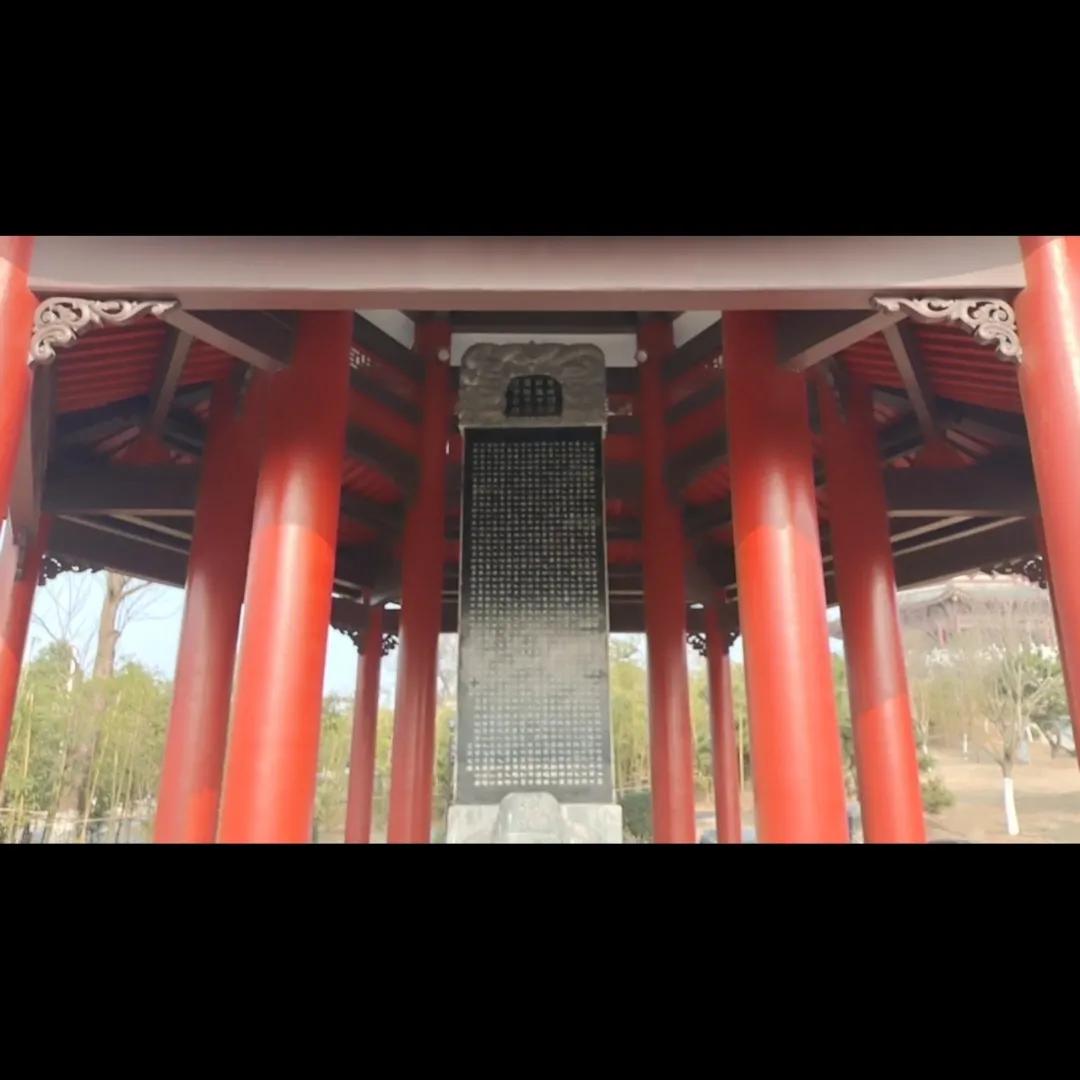
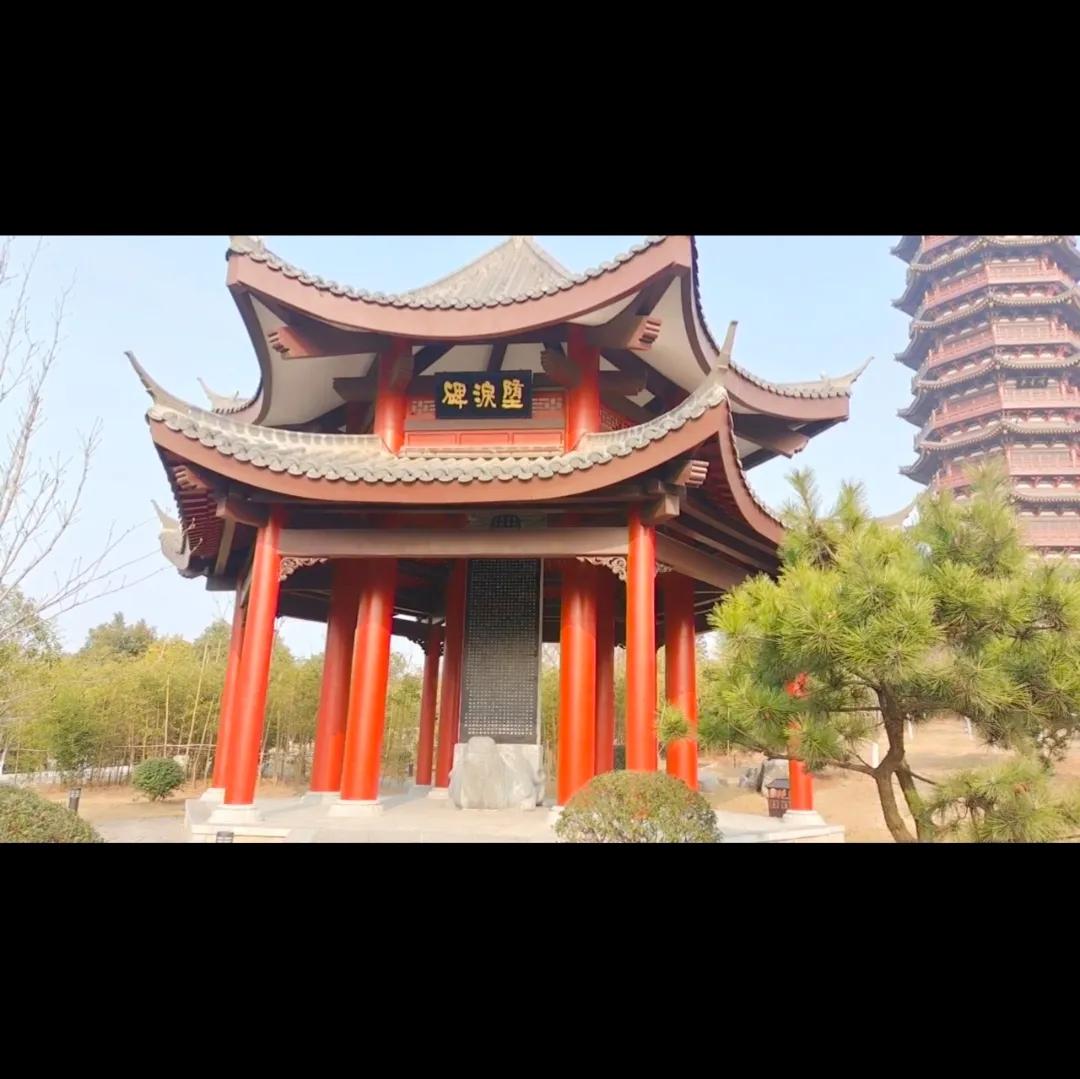
Mt. Xian is a shorthand name of Mt. Xianshou, in Xiangyang, Hubei (same city as in #122), a little south of Yuliang Island in the Han River. This is a different Yunmeng (the poem has just Meng Marsh, but that’s another shorthand name) from the one in #124, which is a couple hundred miles away. Idiom: the land is literally “rivers and mountains,” which is vivid enough I regret not managing to use the phrase. Duke Yang is Yang Hu, a Western Jin official stationed here at the border with Wu; hugely popular for allowing cross-border trade during nominal wartime, he was memorialized after his death in 278 with a stelle that still exists. Weeping before it is enough of a tradition that it’s called the “Monument of Tears” (see the sign on its pavilion).

(Amusement: According to a Han-era dictionary, the original meaning of 胜, which now in places that use simplified characters is usually read as the simplified form of 勝 “success,” was “the stench of a wet dog.”)

A lot of translations understand the gentlemen as “friends,” but I haven’t been able to confirm this in a dictionary and 诸 “many/all” was a respectful pluralizer. I’m keeping it as gentlemen for now and will continue researching this.

---L.
lnhammer: the Chinese character for poetry, red on white background (Default)
Eighth Month, lake level with the banks—
The boundless waters merge with the sky,
Vapors rise from Yunmeng Marsh,
Waves shake the Yueyang City walls.
I want to cross—no boat nor oar.
My quiet life—a shame, Great Sage.
I watch a fisher drop his line:
I envy, all in vain, his fish.

望洞庭湖赠张丞相
八月湖水平,
涵虚混太清。
气蒸云梦泽,
波撼岳阳城。
欲济无舟楫,
端居耻圣明。
坐观垂钓者,
空有羡鱼情。

Tl;dr: I can has job pls? Written in 733 during a visit to Chang’an (where he stayed with Wang Wei) to look for a government post. Spoiler: his plea didn’t work. This is addressed to the same Zhang Jiuling as #119, who was the author of #91. Furthermore, this is the same Yueyang as in #114. Yunmeng (“cloud dream”) was north of the city. Idiom: sky is literally the “great clear(ness).” The address for the prime minister is more literally “enlightened sage,” often used as a flattering title for a ruler or superior.
lnhammer: the Chinese character for poetry, red on white background (Default)
(Before diving into Meng Haoran, a break for one more by Wang Wei: a narrative that’s always struck my fancy—when I first read this anthology in translation, this was, after Song of Lasting Regret, the poem that stuck with me most. It’s easier to understand than SLR, not to mention only a quarter its length, so I’ll drop it here entire instead of in installments.)

A fishing boat sailed up the water, charmed by the mountain spring—
The peaches blooming on both banks, an old ford in between.
Entranced by seeing red, red trees, he didn’t note how far
And traveled to the green creek’s end, not seeing anyone.
He went into a hidden gap that’s folded in the cliff,
And when the mountain opened wide, he saw a long, flat plain.
Far off he saw there was a place where mingled clouds and trees—
Up close he found a thousand homes, spread through bamboo and flowers.
A woodcutter told the visitor they still had Han-style names—
These men outside the world wore clothes unchanged in cut since Qin.
These men outside the world resided at the Wuling’s source,
Together away from the world beyond, tending their fields and gardens—
Where when the moon was bright on the pines, each shuttered house was hushed,
And when day broke amid the clouds, chickens and dogs were noisy.
Startled to hear of a worldly guest, they gathered all around:
Each sought to draw him to their home, and asked about his town.
At daybreak, in the hamlet’s lanes, they swept the fallen flowers;
At dusk, woodcutters and fishers came in, riding upon the stream.
In order to escape the world, they left the realm of men—
They then became immortals here, so hadn’t yet returned.
Within this valley, no one knew about the deeds of men—
Out in the world, who looked from far saw empty clouds and peaks.
Not guessing that this spirit land was hard to see or hear,
With worldly dust still in his heart, his thoughts returned to home:
He left by the cave, not noticing the hills and streams he passed.
Eventually he left his home, planning a leisurely trip:
He told himself he’d gone before and would not be confused.
Who knew that now the peaks and gorges utterly had changed?
He only recalled that at that time he entered deep in the mountains
By many twists of that green creek, then found the cloudy forest.
Spring had come, and those peach blossoms scattered on the waters.
He could not find the immortal source—how could he seek that place?

桃源行
渔舟逐水爱山春,
两岸桃花夹古津。
坐看红树不知远,
行尽青溪不见人。
山口潜行始隈隩,
山开旷望旋平陆。
遥看一处攒云树,
近入千家散花竹。
樵客初传汉姓名,
居人未改秦衣服。
居人共住武陵源,
还从物外起田园。
月明松下房栊静,
日出云中鸡犬喧。
惊闻俗客争来集,
竞引还家问都邑。
平明闾巷扫花开,
薄暮渔樵乘水入。
初因避地去人间,
及至成仙遂不还。
峡里谁知有人事,
世中遥望空云山。
不疑灵境难闻见,
尘心未尽思乡县。
出洞无论隔山水,
辞家终拟长游衍。
自谓经过旧不迷,
安知峰壑今来变。
当时只记入山深,
青溪几曲到云林?
春来遍是桃花水,
不辨仙源何处寻?

Ballad of Peach-Blossom Spring

This is a verse retelling of a utopian fantasy story by Tao Qian, a Six-Dynasties-period poet that Wang Wei namechecked in #115. Knowledge of the original is needed for understanding Wang’s title, as it’s literally “peach spring ballad” without the “-blossom” of the source. It was a famous and popular tale, though, and I’ve already translated two poems (#229 and #262) that reference it. According to local legends, this took place near the headwaters of the Wuling River, not far from Changde, Hunan.

Timeline: The implication is the people came to the valley to escape the civil wars during the transition between the Qin and Han dynasties, around 200 BCE. Tao Qian wrote his story c. 400 CE, during a time of extended strife. Wang Wei wrote this version in the first half of the 8th century, during the peaceful golden age of Xuanzong’s reign, focusing not on the refuge but the spiritual states of the hidden people and the fisherman.

I’m not sure ballad is the best translation of the “old verse form” sense of 行, but this is from the section of “folk-song-style” poems and the term seems to be typically used for pathetic narratives. In any case, the language is not particularly dense, as befits a folk-song, so I went with a 7-beat line with a 4+3 ballad rhythm. [tries to not think about singing it to “The Ballad of Gilligan’s Isle”] [fails] [flails] It’d not be hard to make this version rhyme (in the original, it’s the even lines in pairs), but my first attempts sounded like cod-balladry so I dropped it for now. Regardless, it could use some polishing, but not bad for a first draft. Maybe I’ll try revising it to 6-beat lines.

---L.
lnhammer: the Chinese character for poetry, red on white background (Default)
In middle age, I followed the Buddhist Way—
In evening years, I dwell beside South Mountain.
When the desire comes, I set out alone—
What pleases me, only I can know.
I go down to the water, stopping there,
Then sit and gaze upon the rising clouds.
I sometimes meet an elder in the woods—
We chat and smile—it’s not yet time to go.

终南别业
中岁颇好道,
晚家南山陲。
兴来美独往,
胜事空自知。
行到水穷处,
坐看云起时。
偶然值林叟,
谈笑无还期。

Wangchuan Estate is right next to South Mountain in the Zhongnan Mountains, if that wasn’t clear. Idiom: the Buddhist Way is literally the “good way.” Added in translation: years, to clarify the metaphor (more faithful would be “in my evening,” but that’s clunky), and the final to go—the usual understanding is that it’s time to return home, but given clear the extended sense of “evening,” this line also reads to me as having an more universal meaning.

—L.
lnhammer: the Chinese character for poetry, red on white background (Default)
Since Chu’s frontier, it’s joined three streams—
Nine tributaries till passing Jingmen:
The river flows past heaven and earth.
The mountain’s face is seen, then not.
The city floats upon its banks.
The strong waves shake the distant sky.
Xiangyang has a pleasing landscape—
I’ll stay here drunk with Old Man Shan.

汉江临眺
楚塞三湘接,
荆门九派通。
江流天地外,
山色有无中。
郡邑浮前浦,
波澜动远空。
襄阳好风日,
留醉与山翁。

Xiangyang and Jingmen are cities in Hubei on the Han River, the first close to the traditional border of the Warring States kingdom of Chu, the second further downstream. Idiom: landscape is literally a “wind-bright.” Old Man Shan was Shan Jian, a well-liked local official. Compare this description with that of #125, when we get there.

---L.
lnhammer: the Chinese character for poetry, red on white background (Default)
Ten-thousand gorges, trees reach for sky—
A thousand mountains echo with cuckoos.
A single night of mountain rain
And there’s a hundred tree-top fountains.
Han women pay taxes with kapok fabric,
Ba men bring suits for taro fields.
Wan Weng once rapidly taught these people—
Don’t dare rely on his former worth.

送梓州李使君
万壑树参天,
千山响杜鹃。
山中一夜雨,
树杪百重泉。
汉女输橦布,
巴人讼芋田。
文翁翻教授,
不敢倚先贤。

Zizhuo is in Sichuan, Han and Ba are regions of the same, and Wen Wang a Han-era governor famous for educating a.k.a. civilizing the inhabitants of same. The kapok tree is Bombax ceiba, also known in English as silk-cotton tree—cloth is woven from the fluffy fibers within its seed-pods throughout south Asia.

---L.

About

Warning: contents contain line-breaks.

As language practice, I like to translate poetry. My current project is Chinese, with practice focused on Tang Dynasty poetry. Previously this was classical Japanese, most recently working through the Kokinshu anthology (archived here). Suggestions, corrections, and questions always welcome.

There's also original pomes in the journal archives.

April 2025

S M T W T F S
  12345
678910 1112
13141516171819
20212223242526
27282930   

Syndicate

RSS Atom

Style Credit

Powered by Dreamwidth Studios
Page generated Tuesday, 17 March 2026 00:23

Expand Cut Tags

No cut tags